
Case Study – Depot 4.0
Transforming Heavy Overhaul in a Live MRT Depot
Bishan Depot · SMRT Trains · Singapore
How can operators double heavy overhaul capacity in a 40‑year‑old MRT depot—without expansion, reconstruction, or service disruption?
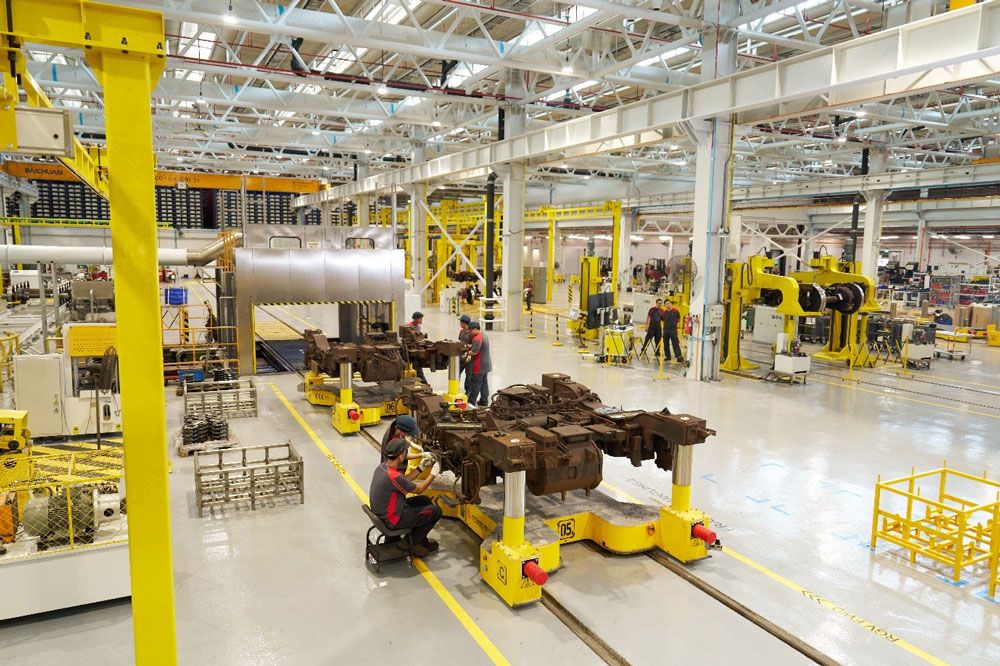
Bishan Depot is one of SMRT’s core rail maintenance facilities, supporting Singapore’s North‑South and East‑West MRT Lines. As the fleet expanded and assets aged, the depot reached a critical capacity constraint.
The challenge was uncompromising:
Heavy overhaul capacity had to double
The depot footprint could not expand
Manpower dependency needed to reduce, not increase
Quality, safety, and auditability had to improve
Passenger service could not be interrupted
Conventional approaches such as rebuilding, expanding, or taking the depot offline were not viable. Any solution had to work within the depot as it existed, while trains continued to run daily.
The STRIDES Approach
Engineering a Solution Around Live Operations
STRIDES designed and delivered Depot 4.0, a semi‑automated, AI‑enabled overhaul system purpose‑built around the physical, operational, and workforce realities of Bishan Depot.
Rather than forcing operations to conform to new technology, the system was engineered to fit:
Existing depot layouts
Live operating rhythms
Safety‑critical workflows
Technician capabilities and welfare
Key elements included:
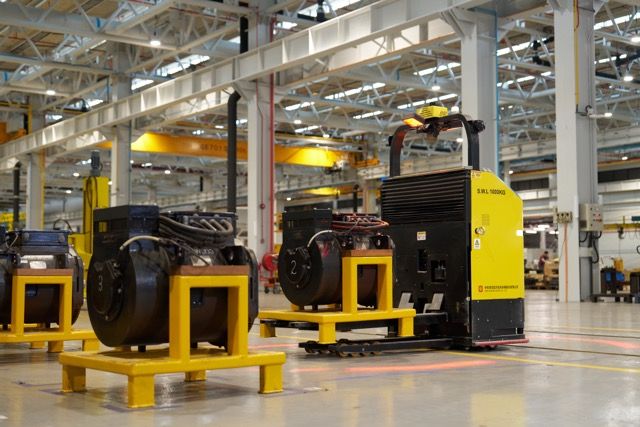
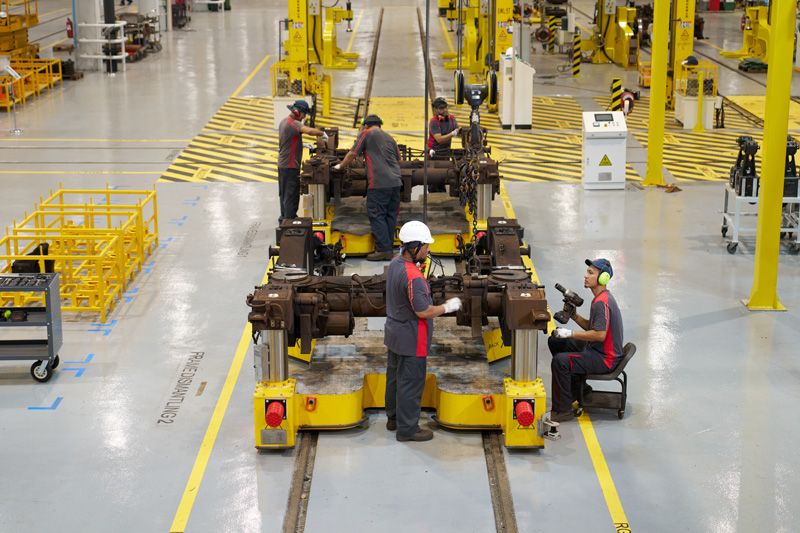
Automated Guided Vehicles (AGVs) replaced manual, high‑risk handling tasks across overhaul bays, reducing physical strain while improving repeatability and throughput.
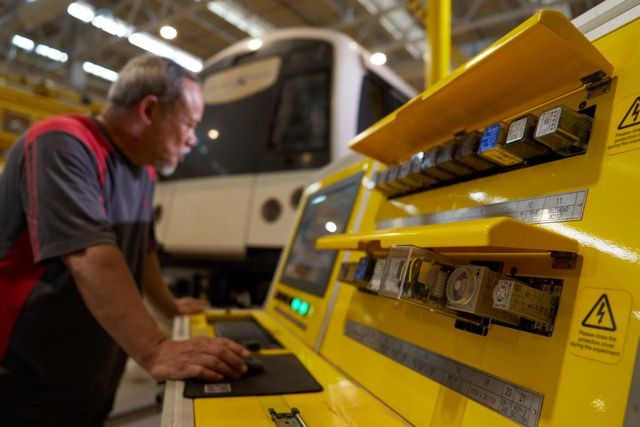
A bespoke command‑and‑control platform replaced spreadsheet‑based planning, giving supervisors real‑time visibility of work progress, constraints, and bay utilisation—enabling faster, better‑coordinated decisions.
End-to‑end digital quality records replaced paper workflows, delivering full traceability, audit readiness, and consistency across overhaul processes.
Analytics and predictive tools shifted the maintenance model from reactive repair to proactive intervention, improving availability and reducing unplanned rework.
A Zero Trust OT/IT architecture, full network segregation, and 24/7 monitoring were embedded from the outset, ensuring operational resilience in a safety‑critical metro environment.
Critically, the entire system was designed, installed, tested, and commissioned while the depot remained fully operational, supporting daily passenger services throughout.
Impact
2× heavy overhaul capacity, same physical space
7‑day overhaul duration per 6‑car trainset
30% reduction in manpower requirements (159 → 100 technicians)
Improved safety, workflow consistency, and technician welfare
Higher quality outcomes with full audit readiness
The depot transitioned from being a capacity constraint into a scalable, resilient maintenance capability embedded within daily operations.
Why It Matters
Brownfield Transformation Without Downtime
Depot 4.0 demonstrates that ageing, space-constrained depots can be transformed through disciplined engineering and systems integration, without expanding physical footprint or service shutdowns.
For operators managing mature networks, the case proves that productivity, safety, and resilience gains are achievable inside live environments, where most real‑world constraints exist.
What Other Operators Can Learn
Capacity gains do not require new depots
Automation must be shaped around existing operations
Digital systems must support frontline decision‑making
Brownfield transformation is possible without disrupting service
Depot 4.0 shows how execution-driven engineering—tested under real operating pressure—can deliver outcomes that theoretical designs cannot.